❄️ Winter range: how much will your EV lose?
Check real-world winter range for any EV — adjust the temperature slider to see estimated range loss. Compare winter range →
🔌 Calculate your real EV charging cost
Compare home off-peak, standard tariff and public rapid charging — and see how much you could save vs petrol. Try the calculator →
The cost of charging an electric car in the UK ranges from about £5 to more than £40 for a full family-sized battery. Where you charge matters more than anything else.
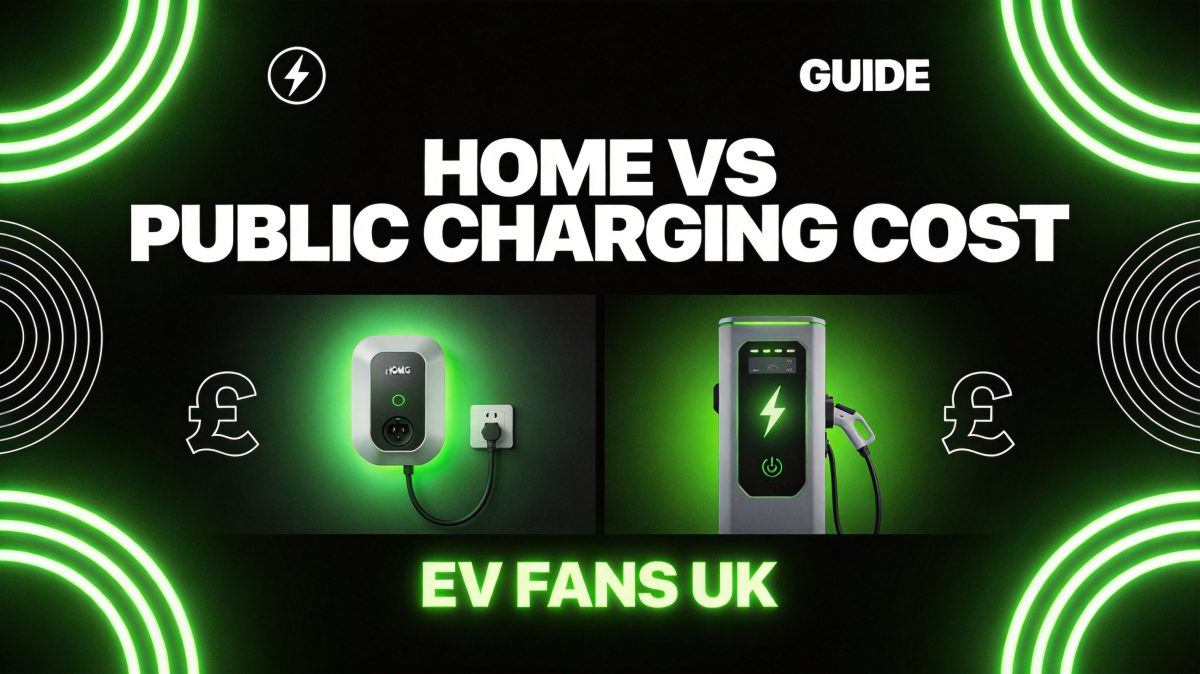
Charging at home is by far the cheapest. At the standard Ofgem price cap rate of around 26p per kWh, a full 64kWh charge costs roughly £17 — about 6-7p per mile. On an off-peak EV tariff, that same charge can drop to as little as £5-7, making home charging roughly 70% cheaper than petrol.
Public charging costs more. According to the Zapmap Price Index, the average pay-as-you-go price in mid-2026 was around 54p per kWh on standard chargers (up to 49kW) and 80p per kWh on rapid and ultra-rapid chargers (50kW+). A 10-80% top-up of a 64kWh family car on a rapid charger costs roughly £40.
Why the difference? VAT. Home electricity is taxed at 5%, but public charging attracts the full 20% rate — adding around 10p to every public kWh before you even factor in network costs.
Prices also vary between networks. Some rapid operators charge 60-90p per kWh, but memberships and off-peak deals can cut that significantly. The Tesla Supercharger network, for example, offers discounted rates to Tesla owners and competitive pay-as-you-go prices to others.
How to cut your charging costs:
1. Install a home charger — our home charging guide covers costs and grants.
2. Switch to an EV tariff with low overnight rates — some are as low as 7p per kWh.
3. Use public chargers strategically — avoid peak times and join network memberships if you regularly use a specific provider.
4. Charge at work or supermarkets where rates are often subsidised.
The bottom line: if you can charge at home, an EV costs roughly half as much per mile as petrol. If you rely on public rapid charging, the savings shrink — but you still avoid fuel duty and most servicing costs.